Investors in 2026 must consider yield, growth, and market trends when evaluating SCHD, JEPI, and QYLD. This article provides projected returns, income, risk profiles, and key 2026 market commentary to guide strategic investment decisions.
Market Overview & 2026 Trends
The US economy in 2026 faces moderate growth, interest rate adjustments, and sector rotation. Dividend growth, covered call strategies, and technology exposure are key considerations. Each ETF targets different market segments, offering distinct risk-return profiles.
Recent commentary:
Projected 2026 Performance & Dividend Comparison
Context: 2026 favors ETFs that balance income and stability. Macro conditions such as inflation, interest rates, and sector rotation affect returns differently for dividend growth versus covered call strategies.
| Metric | SCHD | JEPI | QYLD |
|---|---|---|---|
| Projected Dividend Yield | ~3.9% | ~7–8% | ~11–12% |
| Expense Ratio | 0.06% | 0.35% | 0.60% |
| Projected Total Return | Moderate (~12%/yr) | Stable (~10–11%/yr) | High income, limited capital appreciation |
| Volatility | Moderate | Low–Moderate | High |
| Strategy Focus | Dividend growth stocks | Large-cap equity + option overlay | Nasdaq-100 covered calls |
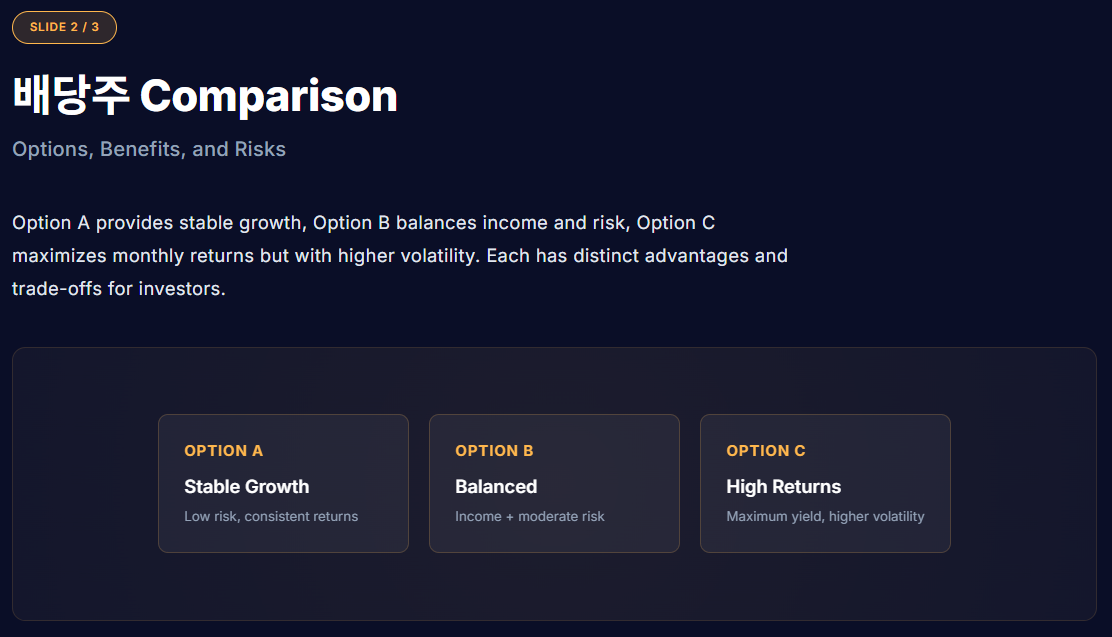
Summary: SCHD offers steady growth, JEPI balances income and risk, and QYLD delivers maximum monthly yield with higher volatility.

SCHD 2026 Details
Background: SCHD continues as a core dividend growth ETF. It focuses on quality companies with consistent payouts, expected to perform steadily in 2026.
| Benefit | Explanation |
|---|---|
| Reliable dividend growth | Consistent payouts with stable long-term performance |
| Low cost | 0.06% expense ratio reduces portfolio drag |
| Quality focus | Strong companies reduce downside risk |
Summary: Ideal for conservative investors prioritizing steady dividends and low cost.
| Limitation | Explanation |
|---|---|
| Modest yield | Lower immediate income than covered-call ETFs |
| Sector constraints | Less exposure to high-growth sectors |
Summary: May underperform in high-growth sectors but offers lower volatility and reliability.
JEPI 2026 Details
Background: JEPI targets stable monthly income with lower volatility, appealing to investors who want cash flow with moderate growth. 2026 projections suggest continued appeal, though options may cap upside.
| Benefit | Explanation |
|---|---|
| High monthly income | Option premiums enhance cash flow |
| Lower volatility | Covered call strategy cushions market swings |
| Balanced approach | Combines income and moderate growth |
Summary: Suitable for predictable monthly income while managing market risk.
| Limitation | Explanation |
|---|---|
| Capped upside | Options limit potential capital gains |
| Competition | Other income-focused ETFs may outperform |
Summary: Trades off high growth for stability and consistent cash flow.
QYLD 2026 Details
Background: QYLD provides the highest monthly yield in 2026. It is attractive for income-focused investors but has limited capital appreciation and higher volatility.
| Benefit | Explanation |
|---|---|
| Very high income | Generates strong monthly cash flow |
| Frequent payouts | Monthly distributions appeal to retirees |
| Downside buffer | Call premiums mitigate some market declines |
Summary: Maximizes monthly income but carries higher risk and limited growth.
| Limitation | Explanation |
|---|---|
| Limited growth | Sacrifices long-term appreciation for yield |
| High volatility | Narrow sector exposure increases risk |
Summary: Ideal for income-driven portfolios but less suitable for long-term growth.
Practical 2026 Investment Guide
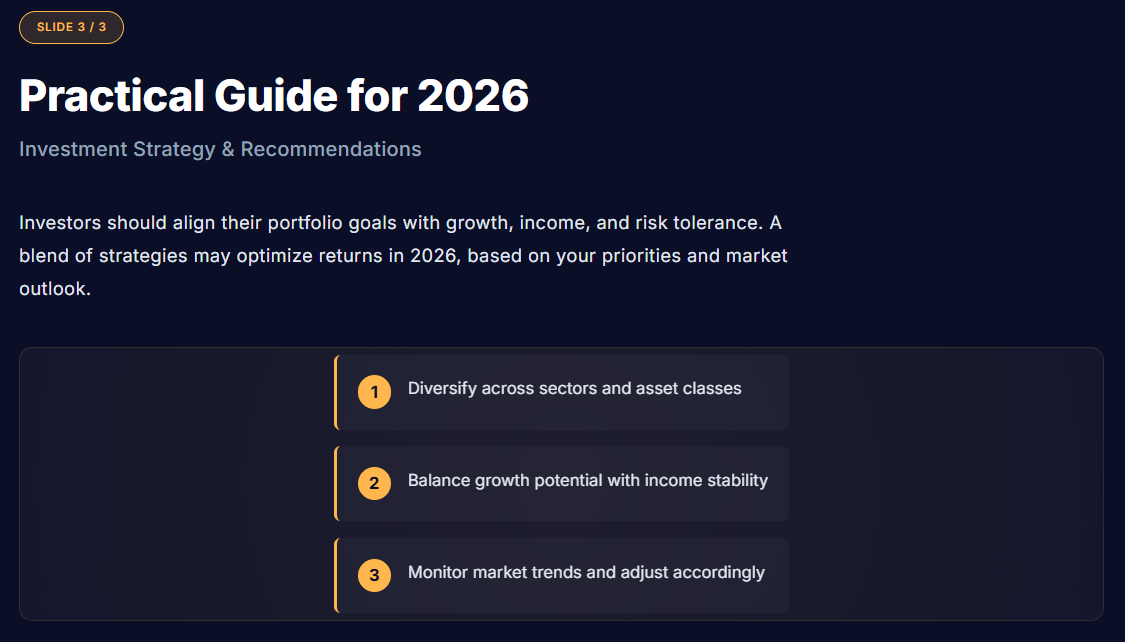
Investors should align ETF selection with goals for growth, income, and risk tolerance. Market conditions favor blending strategies depending on priorities.
| Investor Type | Recommended Option |
|---|---|
| Long-term growth | SCHD |
| Balanced income & stability | JEPI |
| Max monthly cash flow | QYLD |
Summary: Choose SCHD for growth, JEPI for stable income, and QYLD for high monthly payouts based on portfolio goals.
2026 Outlook & Strategy Commentary
- SCHD expected to remain a core holding for steady dividend growth.
- JEPI projected to provide stable monthly income with moderate returns.
- QYLD offers high yield but caps long-term growth.
- A diversified combination of these ETFs may optimize income vs. growth depending on risk tolerance.
Conclusion
For 2026, SCHD, JEPI, and QYLD offer distinct strategies: SCHD for consistent growth, JEPI for balanced income and stability, and QYLD for maximum monthly yield. Investors can leverage this analysis to align portfolios with income, growth expectations, and risk preferences.


