As 2026 approaches, many investors are reassessing their portfolios. The easy-money era is behind us, interest rates remain structurally higher than in the past decade, and market leadership is becoming more selective. In this environment, simply “buying anything” no longer feels sufficient. Investors want clarity, balance, and realistic expectations — especially when choosing ETFs.
This is why interest in the best US ETFs for 2026 continues to grow. ETFs remain one of the most practical investment tools available, offering diversification, transparency, and low costs. But not all ETFs serve the same purpose. Some aim for long-term growth, others focus on income or stability, and an increasing number target specific economic trends.
This article is designed to help you compare promising US ETFs for 2026 in a clear, structured way. Instead of long explanations alone, key differences are presented using tables and simplified frameworks. By the end, you should be able to quickly identify which ETF types align best with your investment goals, risk tolerance, and time horizon.
US ETF Market Outlook Heading Into 2026
Before comparing individual ETF types, it helps to understand the broader market environment shaping investment decisions.
Key Market Trends (Visual Summary)
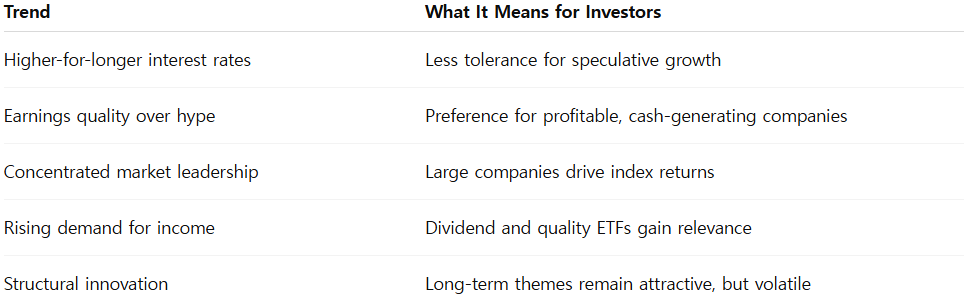
Rather than chasing short-term momentum, investors are increasingly focused on portfolio construction. This has made ETF selection more strategic. Broad market ETFs remain central, but they are often complemented by sector, dividend, or thematic ETFs to address specific goals.
Understanding this context helps explain why certain ETF categories stand out as best US ETFs for 2026, not because they promise extraordinary returns, but because they fit the current market structure.
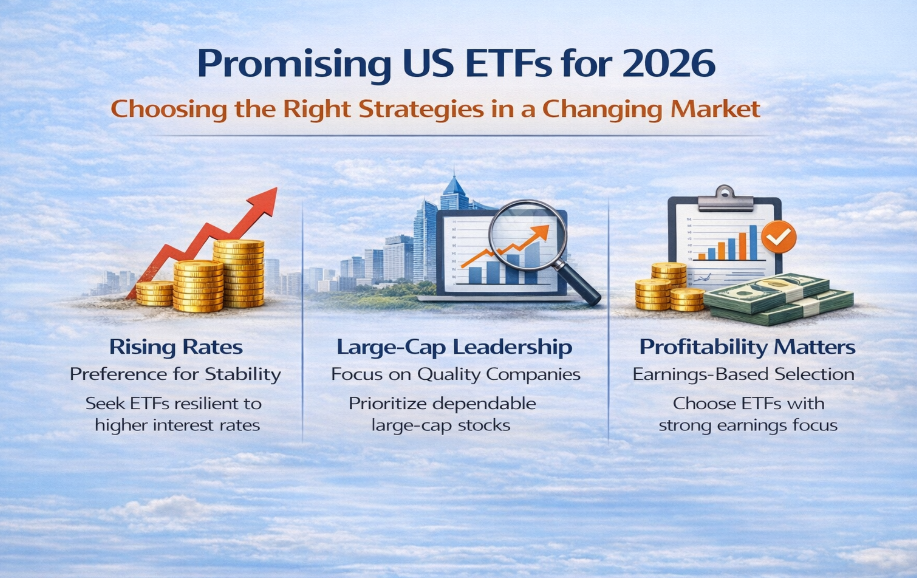
In-Depth Comparison of Promising US ETFs for 2026
Overview: ETF Types at a Glance

Best suited for:
- Long-term investors
- Passive strategies
- Core portfolio foundations
These ETFs remain a cornerstone among the best US ETFs for 2026 because they align well with disciplined, long-horizon investing.
Technology ETFs: Growth With Volatility
Technology ETFs focus on innovation-driven companies, including software, semiconductors, cloud computing, and AI-related infrastructure.
Risk–Reward Profile
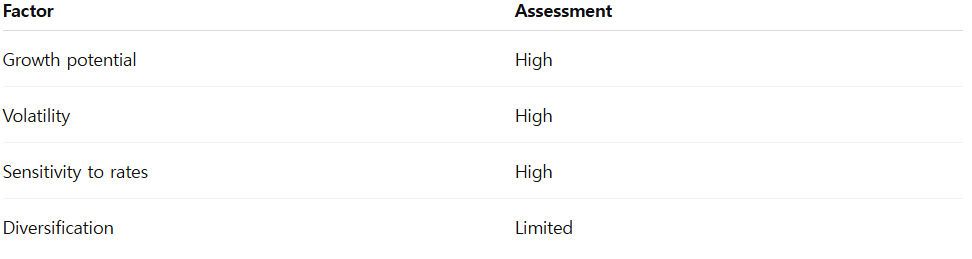
Pros:
- Exposure to structural growth drivers
- Potential for long-term outperformance
Cons:
- Sharp drawdowns during corrections
- Heavily concentrated holdings
Best suited for:
- Investors with long time horizons
- Higher risk tolerance
- Satellite portfolio positions
Technology ETFs can enhance returns but should not dominate a portfolio when selecting promising US ETFs for 2026.
Dividend & Quality ETFs: Stability and Cash Flow
Dividend and quality ETFs emphasize companies with strong balance sheets, consistent earnings, and shareholder-friendly policies.
Why Investors Choose Them

Best suited for:
- Income-focused investors
- Risk-conscious portfolios
- Investors nearing retirement
For many investors, these ETFs provide balance and are strong candidates among the best US ETFs for 2026.

Thematic ETFs: Targeted but Uncertain
Thematic ETFs focus on specific trends such as clean energy, cybersecurity, healthcare innovation, or manufacturing reshoring.
Opportunity vs Risk
| Exposure to long-term trends | Timing uncertainty |
| Clear investment narrative | Overvaluation risk |
| Diversification vs single stocks | Higher expense ratios |
Best suited for:
- Investors with strong convictions
- Smaller tactical allocations
- Long patience and monitoring discipline
Thematic ETFs can add strategic flavor but should remain a limited portion of any portfolio targeting the best US ETFs for 2026.
Practical Decision Guide: Which US ETF Fits You Best?
Decision Framework (Quick Reference)
| Long-term, hands-off investor | Broad market ETFs |
| Growth-focused, risk-tolerant | Technology ETFs |
| Income & stability focused | Dividend / quality ETFs |
| Trend-driven, tactical | Thematic ETFs |
Questions to Ask Yourself
- Do I need income now, or growth later?
- Can I tolerate sharp short-term losses?
- How much time do I want to spend monitoring my investments?
The best ETF choice is rarely singular. Most successful portfolios combine multiple ETF types, each serving a specific role. Understanding these roles is more important than chasing recent performance.

Conclusion
Choosing the best US ETFs for 2026 is ultimately about clarity, not prediction. Broad market ETFs provide reliable long-term exposure, technology ETFs offer higher growth with added risk, dividend ETFs deliver stability and income, and thematic ETFs allow targeted participation in structural trends.
By using clear comparisons and understanding trade-offs, investors can move beyond guesswork and build portfolios that match their real-world goals. The information in this guide is meant to support thoughtful decisions — helping you invest with structure, balance, and long-term confidence rather than short-term excitement.


