For many investors, the U.S. stock market opening day sets the tone for the entire trading year. Whether you actively trade stocks or simply keep a long-term portfolio, understanding how the first trading day of the year works can help you make better, calmer decisions. Every January, questions resurface: When does the U.S. market officially open? Why is the first trading day often volatile? Should investors trade immediately or wait?
This article breaks down everything you need to know about the U.S. stock market opening day in a practical, realistic way. We’ll look at how the opening day works, why it matters, how it compares with regular trading days, and what investors should consider before placing trades. If you’ve ever wondered whether opening-day movements actually matter—or if they’re just noise—this guide is designed to help you decide with clarity and confidence.
Overview of the U.S. Stock Market Opening Day
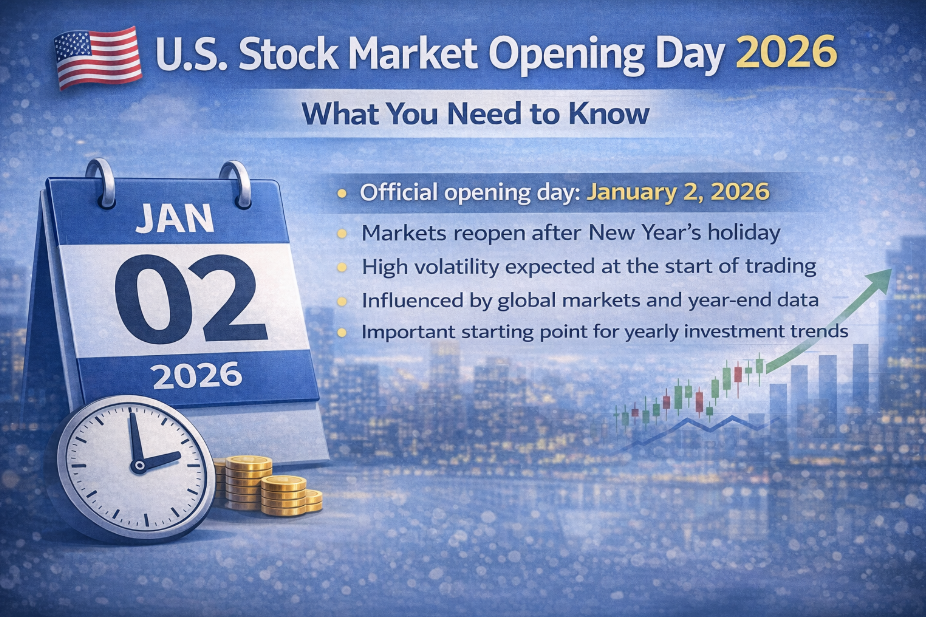
The U.S. stock market opening day typically refers to the first trading day of the calendar year, usually January 2nd or the next business day if January 1st falls on a weekend or holiday. On this day, major exchanges such as the New York Stock Exchange (NYSE) and NASDAQ reopen after the New Year’s holiday closure.
Unlike a regular trading day, the first session of the year carries symbolic and practical weight. Many institutional investors rebalance portfolios, adjust allocations, and react to macroeconomic expectations formed over the holiday period. At the same time, retail investors often enter the market with renewed optimism or caution based on year-end performance and news flow.
The U.S. market officially opens at 9:30 a.m. Eastern Time, but activity begins much earlier in pre-market trading. Economic data releases, overseas market performance, and global political developments can all influence opening prices. This combination of anticipation and repositioning is why the opening day often shows higher volatility than average sessions.
Understanding this context helps investors avoid misinterpreting short-term price swings and prevents emotional decision-making during the first few hours of the trading year.
How the U.S. Stock Market Opening Works
1. Pre-Market Trading and Price Formation
Before the opening bell, U.S. stocks trade in the pre-market session, typically from 4:00 a.m. to 9:30 a.m. Eastern Time. During this period, liquidity is lower, and prices can move more sharply based on limited orders.
On the opening day of the year, pre-market activity reflects accumulated news from the holiday break, including economic data, global market movements, and corporate announcements. Orders placed during this time help form the opening price, also known as the opening auction price.
This process aggregates buy and sell interest to determine a fair opening value, but it can still result in gaps compared to the previous year’s closing price.
2. Opening Auction and Initial Volatility
At 9:30 a.m. ET, the market officially opens, and trades are executed at the determined opening price. This moment often brings increased volatility as delayed orders are executed simultaneously.
On the first trading day of the year, volatility can be amplified due to:
- Portfolio rebalancing by institutions
- Tax-related repositioning after year-end
- Investor reactions to global economic outlooks
- New annual forecasts from financial institutions
This doesn’t necessarily signal a long-term trend but rather reflects short-term adjustments across the market.
3. Trading Hours and Market Structure
After the opening, the market trades continuously until 4:00 p.m. ET, followed by after-hours trading. While prices may stabilize later in the session, the opening hours often see the widest price ranges.
For long-term investors, understanding this structure helps prevent impulsive decisions based solely on early movements.

Key Considerations for Investors on Opening Day
1. Volatility Is Normal — and Temporary
The first trading day often experiences sharper price movements than average. This does not necessarily reflect fundamental changes in a company’s value. Long-term investors should avoid reacting emotionally to early swings.
2. Liquidity Can Be Uneven
Although overall market participation is high, liquidity may be uneven across sectors or individual stocks. This can widen bid-ask spreads, especially in smaller or less-traded equities.
3. Price Gaps Are Common
Opening gaps—where prices jump or drop compared to the previous close—are common on the first trading day. These gaps may close later or persist depending on broader market sentiment.
4. Not All Strategies Fit Opening Day
Short-term traders may find opportunities in volatility, while long-term investors may prefer to observe rather than act. Understanding your own risk tolerance and strategy is crucial.
Who Should Pay Close Attention to the Opening Day?
The U.S. stock market opening day matters most for:
- Active traders seeking short-term opportunities
- Investors rebalancing portfolios at the start of the year
- Those tracking market sentiment for economic signals
On the other hand, long-term investors with diversified portfolios may benefit more from staying focused on fundamentals rather than short-term fluctuations.

Conclusion
The U.S. stock market opening day is more than just a calendar event—it’s a reflection of investor expectations, global sentiment, and market psychology. Understanding how the opening works, why volatility occurs, and what it means for different investment styles can help investors make more informed decisions.
Rather than reacting emotionally, the most effective approach is to view the opening day as one data point within a much longer investment journey. By understanding the mechanics and context, you can decide whether to act, observe, or simply stay the course with confidence.


